

Key Takeaways
- Watch for changes in daily living, safety, social engagement, and caregiver demands that may indicate a need for additional support.
- Approach conversations about senior living with patience, choosing a comfortable setting and focusing on your parent’s goals and priorities.
- Expect multiple conversations before making a decision, allowing time for questions and reflection.
- Assisted living may support some people in the early stages of dementia, depending on their level of independence.
- Memory care is often a better fit as dementia progresses because it provides specialized support and structured routines.
- Help a parent adjust to memory care by bringing familiar belongings, maintaining routines, encouraging participation, and staying involved.
Guide Your Parent to a Supportive New Home
Watching a parent experience the effects of dementia can bring a mix of emotions and difficult decisions. Many families reach a point where they begin wondering whether their loved one would benefit from additional support. While every situation is different, finding the right care environment can help create more stability, comfort, and peace of mind.
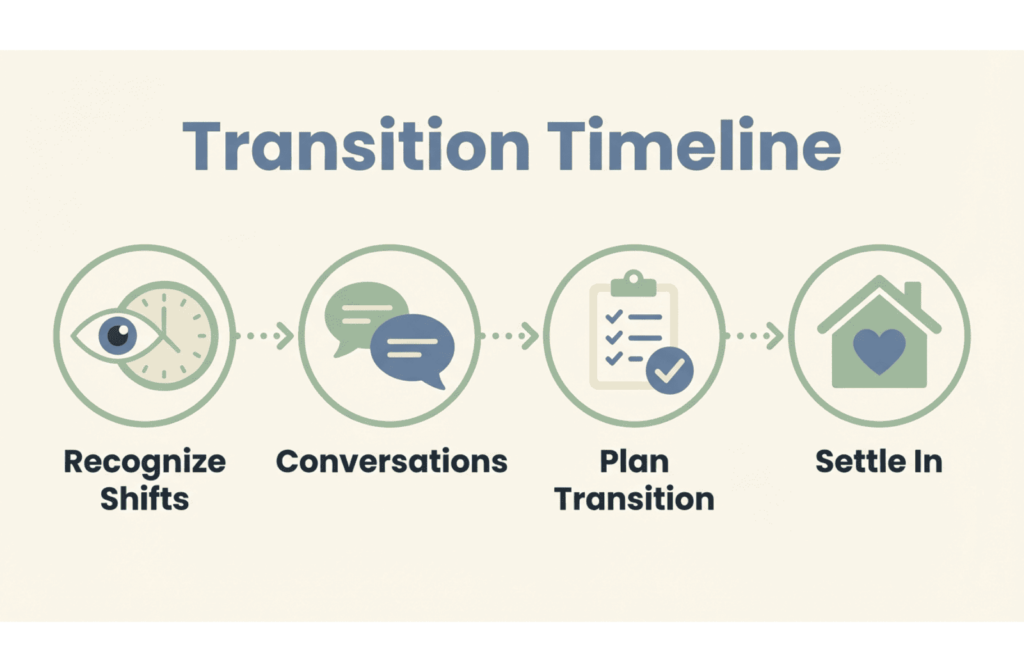
Moving a parent with dementia to senior living is rarely a single decision. It often involves recognizing changing needs, having thoughtful conversations, exploring care options, and helping a loved one adjust to a new environment. With a careful approach, families can make the transition feel more manageable for everyone involved.
How to Tell if Your Parent Needs Help
Dementia affects each person differently, which can make it difficult to determine when additional support is needed. Many families notice a series of small changes over time before realizing their loved one may no longer be thriving at home on their own.
Some common signs include:
- Difficulty managing meals, medications, or personal care
- Increased confusion, wandering, or getting lost
- Missed appointments or forgotten responsibilities
- Changes in household cleanliness or safety
- Isolation, loneliness, or reduced social engagement
- Caregiver responsibilities becoming increasingly difficult to manage
While no single sign automatically means a move is necessary, multiple concerns occurring together may indicate that it is time to begin exploring senior living options.
How to Talk With Your Parent About Senior Living
Conversations about senior living can feel intimidating for both parents and adult children. A thoughtful approach can help your loved one feel respected and included while giving everyone the opportunity to discuss concerns, preferences, and goals openly.
Choose the Right Time and Place
Try to have these conversations when your parent is relaxed and comfortable. A quiet, familiar setting often allows for a more productive discussion than a stressful situation or rushed conversation. Giving everyone time to talk without distractions can make the process feel less overwhelming.
Focus on Their Goals and Priorities
Rather than concentrating only on challenges, talk about what matters most to your parent. This may include staying socially connected, receiving help with daily tasks, enjoying favorite activities, or reducing the stress of managing a home. Framing the conversation around their priorities can help create a more positive discussion.
Keep the Conversation Positive
Senior living is often about adding support rather than taking independence away. Discuss opportunities for connection, convenience, safety, and engagement. Focusing on the benefits can help reduce anxiety and encourage a more open mindset.
Expect More Than One Conversation
Many families do not reach a decision after a single discussion. Your parent may need time to process information, ask questions, and consider different options. Patience and ongoing communication are often important parts of the decision-making process.
Senior Living for Someone With Dementia
The right senior living option depends on a person’s symptoms, daily needs, and overall safety. Because dementia is progressive, it is important to think not only about current needs but also about future support.
In the earliest stages of dementia, assisted living may be a suitable option for some people. Assisted living communities can provide support with daily tasks, meals, housekeeping, medication reminders, and opportunities for social engagement while allowing residents to maintain a degree of independence.
As dementia progresses, however, memory care often becomes the more appropriate choice. These communities are built around the unique needs of people experiencing cognitive decline, providing a level of support that traditional assisted living may not always be able to deliver.
How to Help a Parent Settle Into Memory Care
Adjusting to memory care takes time, both for the person moving and for their family. While every transition is different, there are several ways to help your loved one feel more comfortable during the first days and weeks.
Bring Familiar and Meaningful Belongings
Personal items can help a new space feel more familiar. Family photographs, favorite blankets, meaningful keepsakes, and familiar decorations often provide comfort and create a stronger sense of home.
Establish Consistent Routines
Predictable routines can help reduce confusion and anxiety. Consistency around meals, activities, visits, and daily schedules often helps people with dementia feel more secure as they adjust to a new environment.
Encourage Participation in Community Life
Activities, dining experiences, and social opportunities can help residents build connections and become familiar with their surroundings. Encouragement from family members can help make participation feel more comfortable during the adjustment period.
Stay Connected and Involved
Moving into memory care does not change the importance of family relationships. Regular visits, phone calls, and communication with the care team help maintain meaningful connections while allowing families to stay informed about their loved one’s experience.
Find Support Through Every Step
Moving a parent with dementia is rarely easy, but thoughtful planning can make the transition smoother. Recognizing changing needs, exploring appropriate care options, and staying involved throughout the process can help your loved one remain supported and connected as their needs evolve.
At Liana of Venice, we understand that every family’s journey is different. Our memory care lifestyle is designed to provide compassionate support, meaningful engagement, and personalized experiences that honor each resident as an individual. Schedule a tour with us today to learn more about memory care at Liana of Venice.