


Key Takeaways
- The ability for a person with dementia to live alone is unique to them and depends on various personal factors.
- Regularly assess daily living activities, home safety, and changes in mood or behavior to understand their needs.
- Signs like missed appointments, changes in personal care, or a disorganized home may show a need for more support.
- Options for support range from in-home help and respite care to specialized memory care communities.
- A thoughtful and early conversation about future living arrangements can make any transition a more positive experience.
When a loved one is living with dementia, questions about independence and safety naturally come to the forefront. Families often wonder how long living alone remains a realistic and healthy option. Because dementia progresses differently for each person, there is no single timeline or clear-cut answer.
The right time to consider additional support depends on how well an individual can manage daily life safely and comfortably. By noticing patterns in behavior, home routines, and personal care, families can better understand when added support may help protect well-being and preserve quality of life. It’s important to look for patterns and common signs that indicate a need for more support rather than a single event.
What Are The Key Factors for Living An Independent Life?
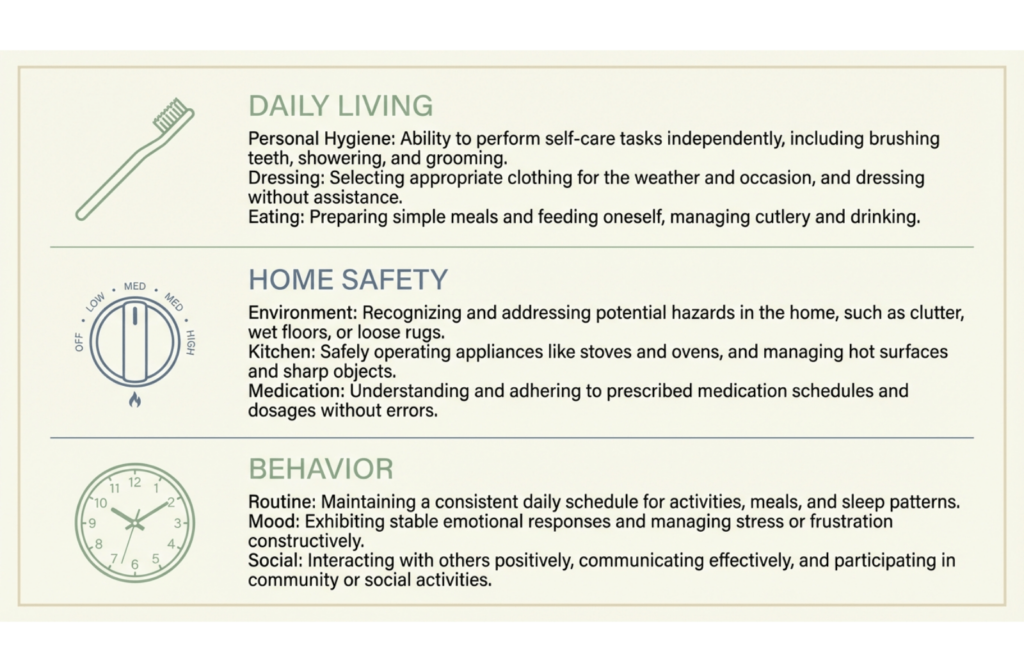
To get a clear picture of your loved one’s situation, it helps to look at their daily life from a few different angles. Considering their ability to manage day-to-day tasks, their safety at home, and their emotional state can give you valuable insight.
Daily Living Activities
The routines that once seemed simple can become more complex. You may want to gently observe how your loved one handles these regular activities of daily living. Are they able to prepare or access nutritious meals? Do they manage their mail and pay bills on time? Also, take note of their personal grooming and hygiene habits.
Safety Concerns in the Home
Your loved one’s home should be a place where they feel secure. Consider how easily they move around the house and whether they are at risk for falls. It’s also important to know if they can properly use appliances like the stove or microwave. Think about how they might respond in an emergency, such as a fire alarm going off.
Changes in Behavior and Mood
Cognitive changes can also affect a person’s emotional well-being and social interactions. You might notice increased confusion, especially in familiar surroundings. Pay attention to shifts in their mood or social engagement, and observe if they have more difficulty with decision-making or solving simple problems, as coping with these changes requires patience.
How to Recognize the Signs It Is Time for More Support
Sometimes, the signs that your loved one could benefit from more help appear gradually. These small shifts in their routine or environment can be indicators that it’s time to explore different types of care and support systems. This is often when families begin to consider when a person with dementia should go into a care home.
Missed Appointments or Medications
One of the first signs you might notice is difficulty with organization. Forgetting to take medications as prescribed is a significant concern. Consistently missing important appointments with doctors or other commitments can also suggest that more daily oversight would be helpful.
Decline in Personal Care
Your loved one’s appearance can offer clues about how they’re managing. You might see a change in their personal cleanliness or notice that they wear the same clothes for several days. These are often signs more support may be needed, showing that managing personal hygiene has become a challenge.
Home Environment Changes
The condition of their home can also reflect their current abilities. When you visit, look for spoiled food in the refrigerator, an unusual amount of clutter, or a general lack of upkeep. A pile of unopened mail or newspapers is another common sign that daily tasks are becoming overwhelming.
What Different Dementia Support Options Are Available in Florida?
As your loved one’s needs evolve, so can the type of support they receive. Understanding the available choices helps you find a solution that fits their current situation, from a little extra help at home to a more structured senior living community.
In-Home Assistance
The first step for your loved one could be bringing support into their home. You can arrange for help that ranges from a family member checking in daily to professional services. These services can assist with chores, meal preparation, and personal care for a few hours a day or week.
The Role of Respite Care
If you are a family caregiver, respite care can offer short-term relief. This option provides your loved one with a safe, supportive environment for a brief period. It gives you time to rest and recharge, helping to prevent caregiver burnout while knowing they are in good hands.
Dedicated Memory Care
If your loved one needs more specialized attention, a memory care community can be a wonderful option. These communities offer programs and a structured setting designed specifically for people with cognitive changes. This type of senior living focuses on both safety and quality of life, so choosing a memory care community that fits your loved one’s needs is an important step.
Planning An Empowering and Supportive Transition
Deciding how long a loved one with dementia can safely live alone is rarely a clear-cut decision. It’s an ongoing process shaped by daily routines, safety, and emotional well-being. As needs change, the focus often shifts from independence alone to comfort, security, and meaningful connection.
Liana of Venice offers dedicated memory care, respite care, and hospice care, all designed specifically for individuals living with dementia. Our community provides a secure, purpose-built environment, consistent daily routines, and a compassionate team trained to support cognitive changes with dignity and understanding. Our location in the heart of Venice allows residents to remain connected to a familiar area while receiving the structure and care they need.If you’re noticing signs that living alone may no longer be the safest option, exploring memory care sooner can bring clarity and peace of mind. Schedule a visit to see how a supportive memory care environment can help your loved one feel safe, engaged, and valued at every stage of their journey.